A definitive account — 2026
The Fall of the Strongman
How Hungary's Democracy Was Captured — and How It Might Be Reclaimed
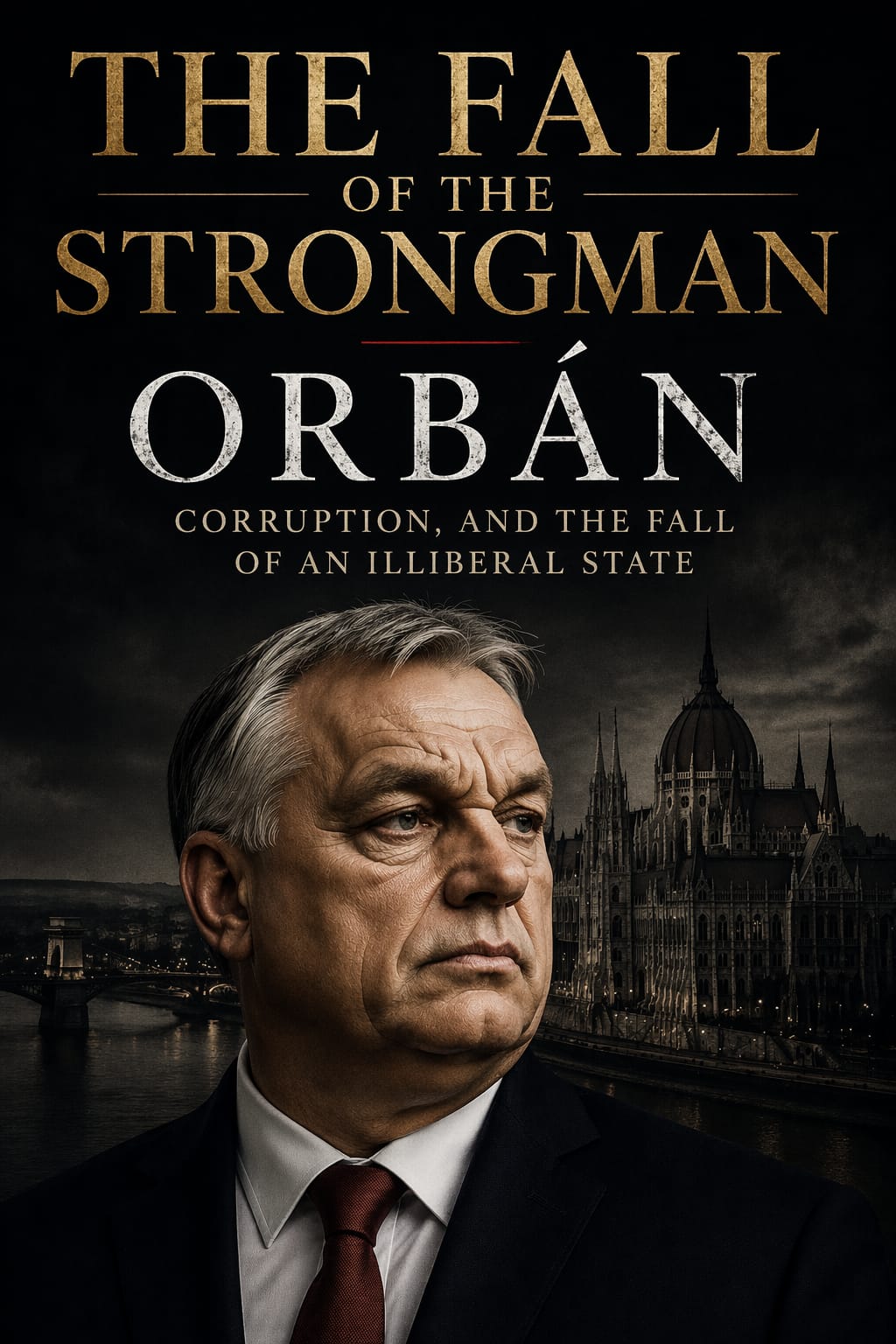
How Hungary's Democracy Was Captured — and How It Might Be Reclaimed
“Democratic backsliding does not happen through a single coup. It happens through hundreds of legal, procedural steps that slowly dismantle checks on power. The same is true of democratic recovery.” — James Smith, Conclusion: The Lesson of Budapest
Hungary’s post-communist transition — the fragility, normalised corruption, and unresolved relationship with the communist past that left the country vulnerable.
How Orbán weaponised democratic institutions to build his system — rewriting the constitution, packing the courts, and creating a structure designed to resist change at the ballot box.
The corruption architecture: the “tűzfal” firewall, Lőrinc Mészáros’s ascent from gasfitter to billionaire, and the Elios streetlight scandal.
5,000 doctors who emigrated, the Central European University expelled, 600,000 Hungarians who left for Western Europe, and the LGBTQ+ community targeted by law.
Putin’s man in the EU, Trump and Vance, CPAC, Marine Le Pen, Matteo Salvini — Orbán’s global nationalist network and what it meant for European security.
Péter Magyar — former insider, Fidesz loyalist, now the focal point of the anti-Orbán coalition. Who he is, what he knows, and what comes after.
The four warning signals that political analysts, prediction markets, and FX traders were tracking as the 2026 election approached.
The reconstruction challenge: packed courts, captured state media, distorted capital relationships, an exodus of talent, and the long road back.
“By 2023, more than 500 Hungarian media outlets fell under some form of pro-government control. In 2010, Reporters Without Borders ranked Hungary 23rd globally for press freedom. By 2024, it had fallen to 72nd.”
— Chapter 4: The Human Cost“The system functioned as a protective barrier between the political leadership and the direct flow of money. Intermediaries received the contracts, built the businesses, and provided whatever political support was required.”
— Chapter 3: The Money“OLAF investigated 43 cases of suspected EU fund misuse in Hungary between 2010 and 2020. The Elios streetlighting case alone involved €11 million in contracts, awarded to a 26-year-old with no relevant experience.”
— Chapter 3: The Money“Hungary entered the 2026 election with structural conditions — economic stagnation, EU fund freezes, diplomatic isolation, and a unified opposition — that had not existed at any point since Orbán took power in 2010.”
— Chapter 7: Election NightDownload a 5-page preview — cover, about the book, what you’ll learn, key quotes — before you decide.
Get the Preview